Alkaline Meal Ideas for Omnivores, Vegetarians and Vegans
Simple plant-forward meal ideas for omnivores, vegetarians and vegans, with the nutrients to watch and who should get advice before changing their diet.
Contents
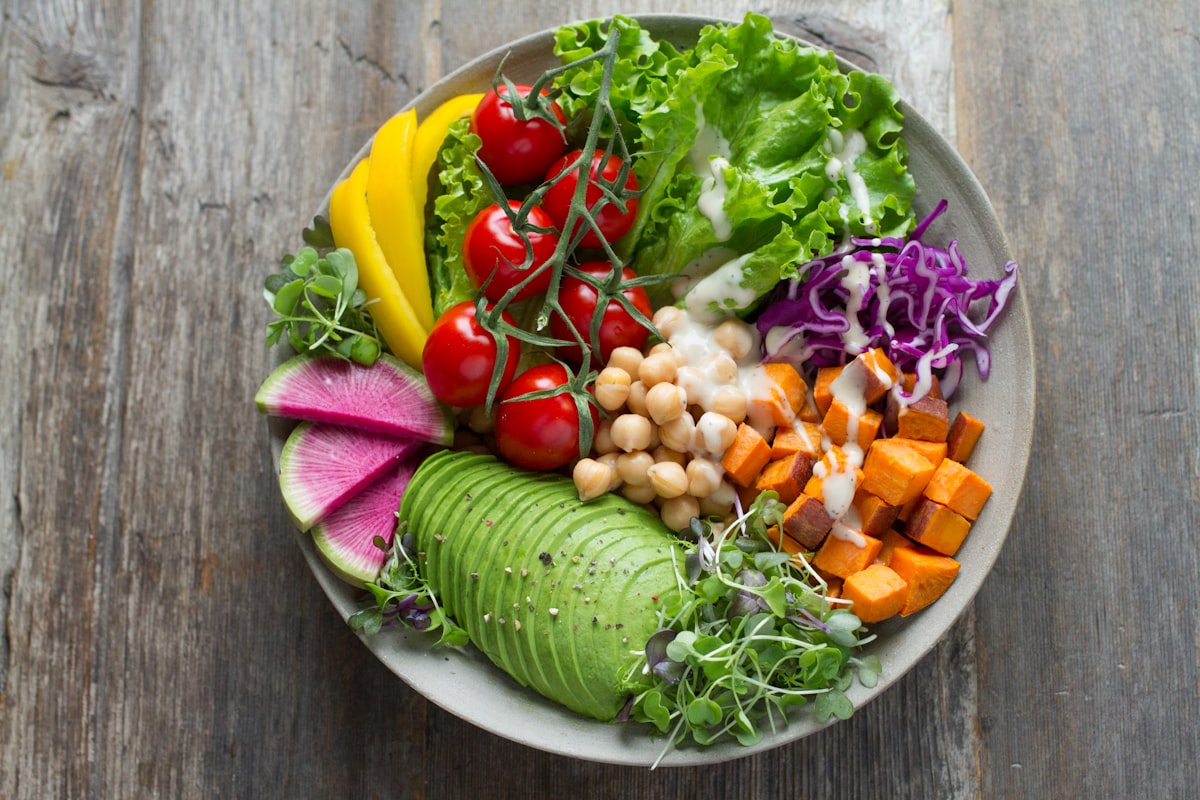
An alkaline-leaning meal is a plant-forward meal: about half the plate vegetables and fruit, with whole grains and a protein food filling the rest. You do not need to cut out meat, dairy or grains. The ideas below work for omnivores, vegetarians and vegans, and none of them requires a test strip.
Start with the plate
Harvard's Healthy Eating Plate is a good template:
- Half the plate: vegetables and fruit
- A quarter: whole grains
- A quarter: protein foods such as fish, poultry, beans and nuts
The World Health Organization sets a similar floor of at least 400 grams of fruit and vegetables a day.
This plate also happens to be alkaline-leaning. In the published acid-load values, vegetables and fruit score as alkaline-forming, and protein foods and grains score as acid-forming. When vegetables and fruit fill half the plate, they offset most of the rest.
The reason to eat this way is the general evidence for vegetables, fruit and whole grains. It is not that food changes your blood pH, because it does not.
Meal ideas for omnivores
Keep the meat, fish and eggs you enjoy, and build the vegetables up around them.
- Breakfast: eggs scrambled with spinach and tomato, or plain yogurt with a banana and a few raisins
- Lunch: a large salad or vegetable soup with chicken or canned fish, and a slice of whole-grain bread
- Dinner: fish or meat on a quarter of the plate, two vegetables on half of it, and rice, pasta or potatoes on the rest
- Snacks: fruit, raw vegetables, or a small handful of nuts
Two adjustments do most of the work. Treat strong cheese as a seasoning and not as the main event, since hard cheeses such as Parmesan have the highest acid load in the chart. And follow Harvard's advice to limit red meat and avoid processed meats such as bacon and cold cuts.
Meal ideas for vegetarians
Eggs and dairy make a vegetarian plate easy to balance, and they supply vitamin B12 and iodine.
- Breakfast: oatmeal with milk, sliced banana and walnuts
- Lunch: lentil soup with carrots and celery, and whole-grain bread
- Dinner: a vegetable omelet with a tomato salad, or bean chili over rice
- Snacks: yogurt with fruit, or apple slices with peanut butter
One thing to watch: a vegetarian diet built on cheese is not alkaline-leaning. Swapping a steak for a cheese-heavy pasta can raise the acid load. Let beans, lentils and eggs share the protein role with cheese.
Meal ideas for vegans
Build each meal around a protein-rich plant food such as beans, lentils, tofu or tempeh. Then add vegetables and whole grains.
- Breakfast: oatmeal made with fortified soy milk, with banana and walnuts
- Lunch: a burrito bowl with black beans, rice, tomato, lettuce and avocado
- Dinner: lentil and vegetable curry with rice, or a tofu and broccoli stir-fry
- Snacks: hummus with raw vegetables, fruit, or nuts
The Academy of Nutrition and Dietetics states that appropriately planned vegetarian and vegan diets can be nutritionally adequate for adults. The planning matters most for two nutrients:
Vitamin B12. Plant foods have no vitamin B12 unless it has been added. Adults need 2.4 micrograms a day. Eat B12-fortified foods every day, such as some breakfast cereals and nutritional yeasts, or take a B12 supplement. Check the label, because fortification varies by product.
Iodine. Adults need 150 micrograms a day, and the National Institutes of Health lists people who follow a vegan diet among those more likely to fall short. The simplest fix is to cook with iodized salt. Sea salt, kosher salt and Himalayan salt are not usually iodized.
If you eat mostly raw food
Raw vegetables and fruit fit this pattern well. A few points keep it safe and complete:
- Wash all produce under running water before you prepare or eat it, as the U.S. Food and Drug Administration advises.
- Be careful with raw sprouts. The FDA says children, older adults, pregnant women and people with weakened immune systems should avoid raw or lightly cooked sprouts of any kind.
- Plan for B12 and iodine. A raw vegan diet has the same gaps as any vegan diet.
The acid-load values give no reason to prefer raw vegetables over cooked ones, so eat them the way you enjoy them.
Small habits that add up
- Add one vegetable or fruit to a meal you already eat.
- Keep frozen vegetables and canned beans in the house for nights when cooking feels like too much.
- Put the vegetables on the plate first, then fit the rest around them.
- Drink plain water. Harvard Health says there is no evidence that alkaline water is a better choice.
What not to cut
Whole grains, fish, eggs, yogurt, beans and nuts all score as acid-forming on a PRAL chart. They are also some of the best foods you can eat, and Harvard's plate keeps half its space for them.
Removing whole food groups to chase a higher number on a urine strip makes a diet worse. Adding vegetables and fruit makes it better. Choose the second.
Who should get advice first
Fruit, vegetables and beans are major sources of potassium. For most people that is a benefit. For some it needs supervision:
- People with chronic kidney disease. The National Institutes of Health notes that people with kidney disease can develop high blood potassium even on typical amounts from food. The National Kidney Foundation says that adding more fruit, vegetables or plant proteins can affect potassium levels, and recommends working with a kidney dietitian.
- People taking ACE inhibitors or potassium-sparing diuretics. These medicines can also raise blood potassium. Ask your doctor or pharmacist before making large changes or using a salt substitute, since many salt substitutes contain potassium.
- Anyone pregnant or breastfeeding. Needs for vitamin B12 and iodine are higher, so a vegetarian or vegan diet takes more planning.
If one of these applies to you, a registered dietitian can fit this way of eating to your situation.
Sources
- Harvard T.H. Chan School of Public Health. Healthy Eating Plate. The Nutrition Source. Last reviewed January 2023.
- World Health Organization. Healthy diet. Fact sheet. January 26, 2026.
- Raj S, Guest NS, Landry MJ, Mangels AR, Pawlak R, Rozga M. Vegetarian Dietary Patterns for Adults: A Position Paper of the Academy of Nutrition and Dietetics. Journal of the Academy of Nutrition and Dietetics. 2025;125(6):831-846.e2.
- NIH Office of Dietary Supplements. Vitamin B12: Fact Sheet for Consumers. Updated December 15, 2023.
- NIH Office of Dietary Supplements. Iodine: Fact Sheet for Consumers. Updated May 1, 2024.
- U.S. Food and Drug Administration. Selecting and Serving Produce Safely. Content current as of March 5, 2024.
- LeWine HE. Is alkaline water better? Harvard Health Publishing. February 23, 2024.
- NIH Office of Dietary Supplements. Potassium: Fact Sheet for Consumers. Updated March 22, 2021.
- National Kidney Foundation. Metabolic acidosis. Updated March 18, 2024.
